

Keeping the workplace safe is something every company must take seriously. Poor safety management can cause accidents, fines, and even damage the company’s reputation.
Even though businesses try to maintain safe workplaces, mistakes still happen when safety processes are done manually, handled only after problems occur, or not recorded properly.
The positive side is that modern technology now makes it much easier to create stronger and more reliable safety systems.
Why Safety Management often fails
Many companies still manage safety using paper forms, spreadsheets, or scattered reports. This approach makes it difficult to keep track of compliance, spot risks before they turn into problems, or share updates clearly across teams.
Because of this, safety programs often end up being reactive. Instead of preventing issues, they only respond after an incident has already happened.
Common Mistakes in Safety Management
Many safety programs fail because of repeated mistakes that weaken their effectiveness.
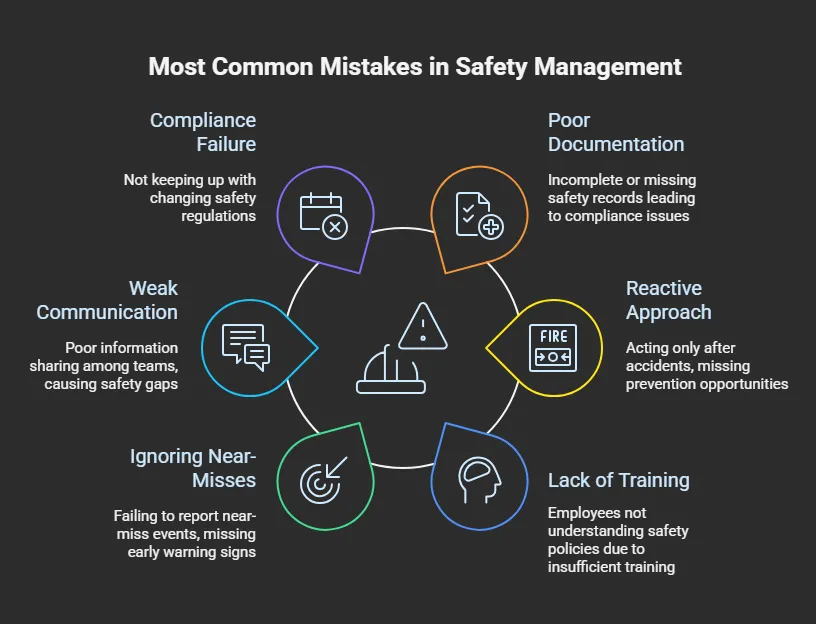
Some of the most common ones include:
- Poor Documentation and Record-Keeping: When safety data is stored on paper or in manual logs, records are often missing or incomplete. This makes it hard to stay compliant and increases the chances of errors.
- Reactive Instead of Proactive Approach: Some organizations only act after an accident happens. This increases risks, leads to higher costs, and misses the chance to stop problems before they occur.
- Lack of Employee Training and Awareness: Even the best safety policies fail if employees don’t understand them. Without regular training, staff may not follow safety rules correctly.
- Ignoring Near-Miss Reporting and Safety Data: Near-miss events are warning signs. If they aren’t reported, companies lose the chance to fix issues early and prevent serious incidents.
- Weak Communication Across Teams: When managers, supervisors, and workers don’t share information properly, safety gaps appear. This often results in delayed reporting and poor visibility of risks.
- Failure to Keep Up with Compliance Requirements: Safety regulations often change. Relying on manual tracking makes it easy to miss updates, which can lead to compliance issues and fines.
How Software Helps Avoid These Mistakes
Safety management software solves many of the problems that come with manual systems. By going digital, companies get real-time visibility and better control over safety.
- Centralized Records
All safety reports, inspections, and incident details are stored in one secure system, making it easy to find and track information. - Proactive Risk Management
Automatic alerts and reminders help spot risks early, so issues can be fixed before they turn into bigger problems. - Training and Compliance Tracking
The software keeps digital records of staff training, certifications, and compliance requirements, ensuring nothing is missed. - Data-Driven Decisions
With built-in reports and analytics, managers can see patterns and make faster, smarter decisions to improve safety. - Improved Communication
Mobile access allows employees to report incidents or hazards instantly, no matter where they are.
By replacing manual processes with smart software, organizations can create a safer workplace, stay compliant, and prevent costly mistakes.
Steps to Start Digitizing Safety Management
If your company still relies on paper or spreadsheets, here’s how you can make the shift to digital safety management:
- Assess Current Challenges
Start by checking where mistakes or gaps usually happen in your safety process. This will help you understand what needs improvement. - Choose the Right Software
Pick a safety platform that is simple to use, secure, and able to grow with your organization’s needs. - Train Your Team
Make sure employees know how to use the software properly. A system is only effective if everyone understands it. - Integrate Into Daily Work
Replace manual tasks like paper forms and spreadsheets with digital workflows so safety becomes part of everyday operations. - Review and Improve
Use reports and analytics to track progress. Keep adjusting your strategies to make the system even more effective.
By following these steps, organizations can build a strong digital foundation for workplace safety.
SAFETEK – AI Powered Health & Safety System
SAFETEK is HITEK’s smart platform built to make workplaces safer and more compliant. Powered by AI, it supports Health, Safety, Environment, and Quality (HSEQ) management with the goal of achieving zero incidents.
The system removes the need for paper forms and manual processes by making safety management fully digital. It helps organizations track compliance, run audits, and monitor incidents in real time.
Through easy-to-use mobile and web applications, SAFETEK provides instant access to safety data, automated reporting, and clear insights. This gives managers complete visibility and control, allowing them to take quick action and keep safety standards high across all operations.
Conclusion
Mistakes in safety management happen often, but they don’t have to lead to accidents or penalties. By moving safety processes to digital systems, companies can lower risks, stay compliant, and build safer work environments. With tools like SAFETEK, it becomes easier to move away from reacting after incidents and instead create a proactive, data-based safety culture.